Quick answer
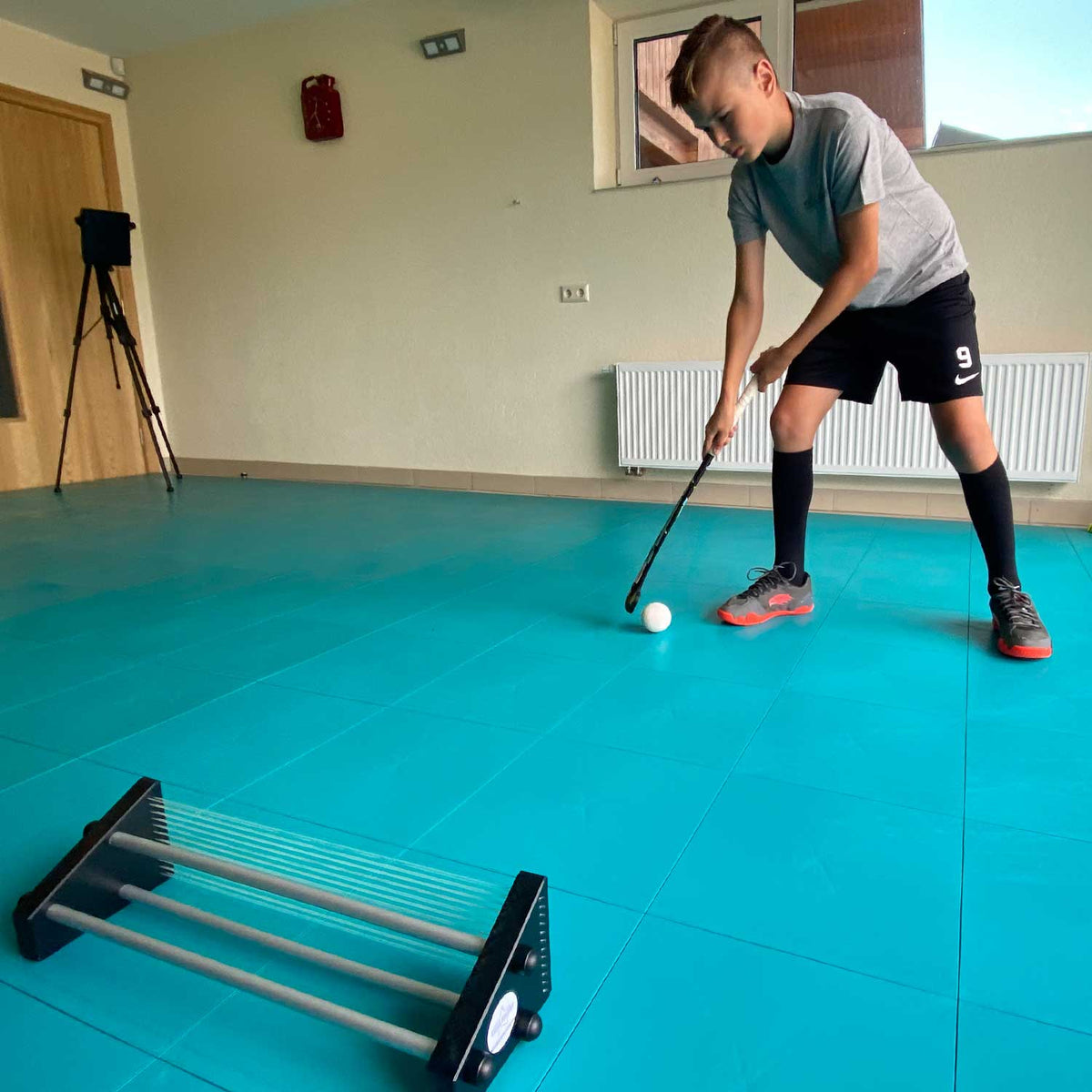
When it is too cold, wet or dark to train outside, a 20-minute routine at home keeps your field hockey skills sharp. Start with a 3-minute warm-up and 6 minutes of ball control. Follow with 6 minutes of passing and receiving, 3 minutes of footwork and a 2-minute challenge to finish. Do it 3–4 times a week in a garage, basement or hallway. You need a flat floor of about 2 × 3 m (6.5 × 10 ft), a stick and a ball. A wall, a rebounder and a few cones make it better.
Key takeaways
- 20 minutes, 3–4 times a week, keeps your touch through winter.
- Keep the ball on the floor indoors: dribbling and push passes only.
- Warm up properly. Cold muscles in a cold garage get injured more easily.
- Use the same routine every time and track one number to see progress.
- Change the drills every 3–4 weeks to keep it interesting.
What you need
- Space: about 2 × 3 m (6.5 × 10 ft) of flat floor, with nothing breakable nearby.
- Surface: smooth concrete, a hard floor, or flooring tiles if the floor is rough or needs protection.
- Gear: stick, 1–3 balls, 4 cones or markers.
- Optional: a Rebounder if you have no wall to pass against, and a Skiller for ball control drills.
The 20-minute routine
1. Warm-up (3 minutes)
- 30 seconds jogging on the spot
- 30 seconds lateral shuffles
- 10 lunges each leg with a twist
- 1 minute easy ball touches: forehand, then reverse stick
2. Ball control (6 minutes)
- Indian dribble, 2 × 1 minute: wide, then narrow and fast.
- Pull-back and go, 1 minute: drag the ball back, turn, push forward.
- Cone or Skiller slalom, 2 × 1 minute: weave through with the ball close to the stick.
- Head-up, 1 minute: have someone call colours or numbers, or use the free Field Hockey App.
3. Passing and receiving (6 minutes)
Stand 3–4 m (10–13 ft) from a wall or rebounder.
- 2 minutes forehand push and receive
- 2 minutes receive on the reverse stick, move to forehand, push
- 2 minutes one-touch passing, as fast as you can stay accurate
4. Footwork (3 minutes)
Set four cones in a 1.5 m (5 ft) square. Dribble to each cone, change direction, and come back to the middle. Do 3 × 40 seconds with 20 seconds rest. If you have Skills Zone tiles, follow the colour or symbol calls instead.
5. Finish with a challenge (2 minutes)
Count clean passes against the wall or rebounder in 60 seconds. Write the number down. Try to beat it next time.
Make it last all winter
- Weeks 1–3: focus on clean technique, slower speed.
- Weeks 4–6: same drills, faster.
- Weeks 7–9: swap in new drills: V-drags, receiving on the move, push passes off the dribble.
Honest notes
- Home training won't replace team practice or match play. It keeps your touch and builds habits.
- A wall is free and works fine. A rebounder is useful indoors, on tiles or when you can't use a wall.
- Don't hit or lift the ball indoors. Save hits and drag flicks for the pitch.
FAQ
How can I practise field hockey in winter?
Train indoors on a flat floor: ball control, push passes against a wall or rebounder, and footwork. 20 minutes, 3–4 times a week, is enough to keep your skills sharp.
How much space do I need?
About 2 × 3 m (6.5 × 10 ft) is enough for dribbling and passing drills. More space lets you add longer passes and footwork patterns.
Can I train field hockey in a cold garage?
Yes, but warm up well and wear layers. Cold muscles are more likely to get strained.
Do I need special equipment?
No. A stick, a ball, a wall and a few cones are enough to start. Training aids make sessions more varied and consistent.
Related articles
- Field hockey off-season training plan
- Indoor hockey season: prepare your skills at home
- Field hockey gifts: Christmas gift guide
In the US? The Rebounder, Skiller and Skills Zone are also available on Amazon.