Quick answer
The most common backhand (reverse stick) receiving mistakes are: a stick held too upright, a stick face that isn't angled to absorb the ball, receiving too close to the feet, standing flat-footed, and gripping too tightly with the right hand. To fix them, turn the stick over with the left hand, get it low and slightly angled over the ball, receive in front of the left foot, and move your feet toward the ball. Train it against a wall or rebounder at 3–5 m (10–16 ft), 3 sessions a week, with slow, soft passes first.
Key takeaways
- The left hand turns the stick; the right hand stays loose.
- Stick low and close to the ground, angled slightly forward over the ball.
- Receive in front of your body, around the left foot, not under you.
- Move to the ball. Waiting flat-footed is the root of many errors.
- Plan your next touch before the ball arrives.
Why backhand receiving is hard
On the forehand, the stick sits naturally on your right side and the big flat face meets the ball. On the reverse, you turn the stick over and receive on your left with a smaller, less familiar contact area. Many players avoid it by running around the ball to take it on the forehand. That costs time, and good opponents notice. In a game, balls come to your left side all the time, so a reliable reverse stick reception is a must for every position.
The 7 most common mistakes
1. Stick too upright
If the stick is vertical, there is only a small contact area and the ball easily slips underneath. Fix: bend your knees and lower the stick so more of it lies close to the ground.
2. Wrong stick angle
A stick face that is open or tilted back lets the ball bounce up or off. Fix: angle the stick slightly forward over the ball, so the ball is trapped against the ground rather than bouncing away.
3. Receiving too close to the feet
When the ball arrives under your body, you have no room for the next touch and often kick it. Fix: receive in front of your left foot, about an arm's length away.
4. Flat feet
Standing still and reaching for the ball pulls you off balance. Fix: stay on the balls of your feet and take a small step toward the ball's line.
5. Tight right hand
The left hand should rotate the stick. A tight right hand fights the turn and makes the stick stiff, so the ball bounces off. Fix: let the stick turn in a loose right hand. Soft hands absorb the pace.
6. Eyes off the ball too early
Looking up for the next pass before the ball has arrived is a classic error. Fix: look up before the ball comes, then watch it onto the stick.
7. No plan for the next touch
Stopping the ball dead and then thinking slows the game down. Fix: decide before you receive: hold, carry to the forehand, or pass on.
Drills to fix them
| Drill | Setup | Reps | Fixes |
|---|---|---|---|
| Static reverse receive | 3 m (10 ft) from a wall or rebounder | 3 × 1 min | Stick angle, soft hands |
| Step and receive | Start 1 m to the right of the ball's line | 3 × 10 reps | Flat feet, ball position |
| Receive and carry | Receive on reverse, carry to forehand, push | 3 × 1 min | Next-touch planning |
| Call and receive | Partner calls "hold" or "go" as the ball comes | 3 × 8 reps | Eyes and decisions |
Static reverse receive
Push the ball to the wall or a Rebounder from your forehand, and receive the return on the reverse. Start with soft passes. Count clean receptions where the ball stops within a stick length.
Step and receive
Push the ball so it returns slightly to your left. Step across with your feet, then receive. This teaches you to move to the ball instead of reaching.
Receive and carry
Receive on the reverse, move the ball across your body to the forehand in one smooth touch, then push pass. This is the most common game pattern for a reverse stick reception.
Call and receive
A partner calls "hold" (stop the ball) or "go" (carry it into space) just before it arrives. You can't decide too early, and you have to stay balanced.
Wall or rebounder?
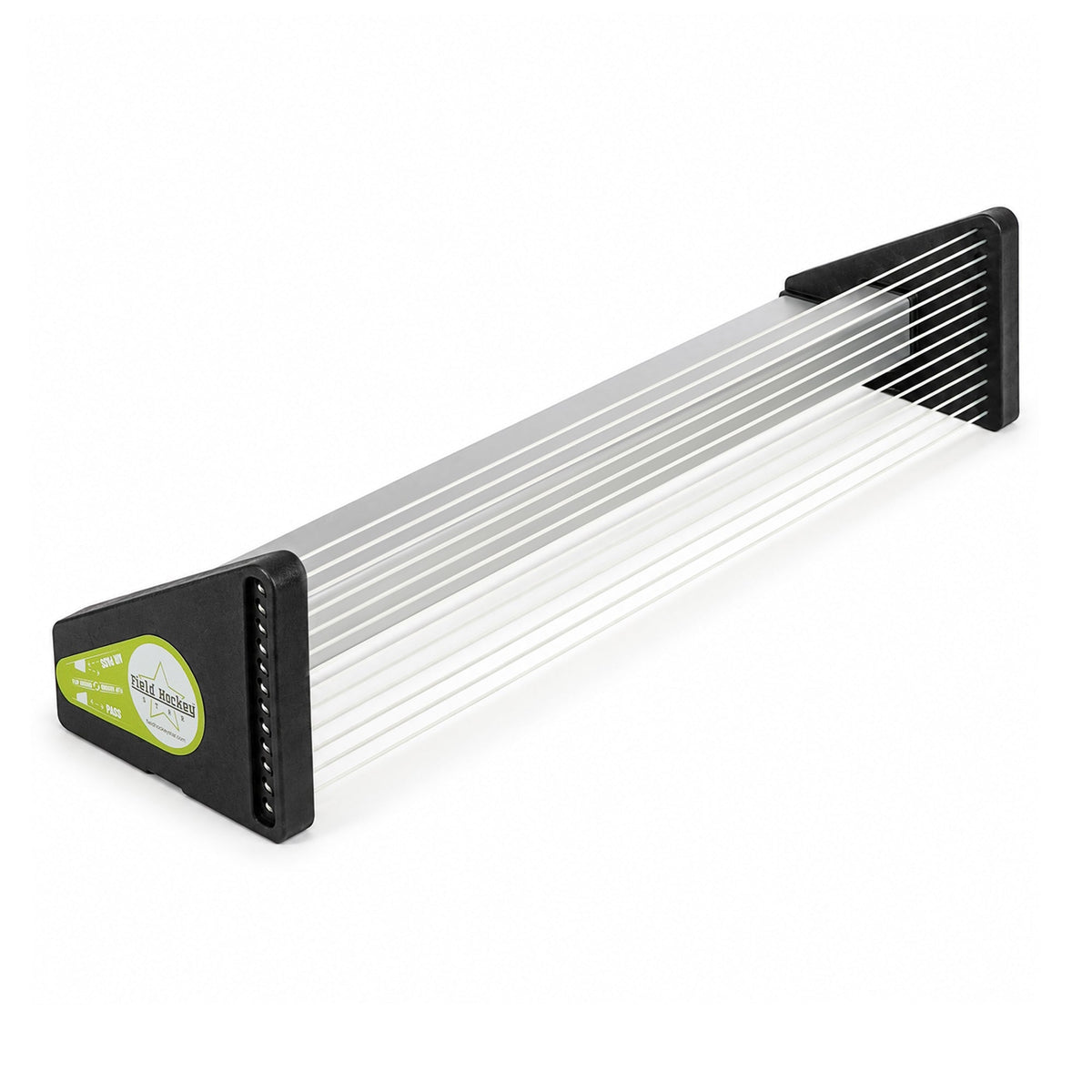
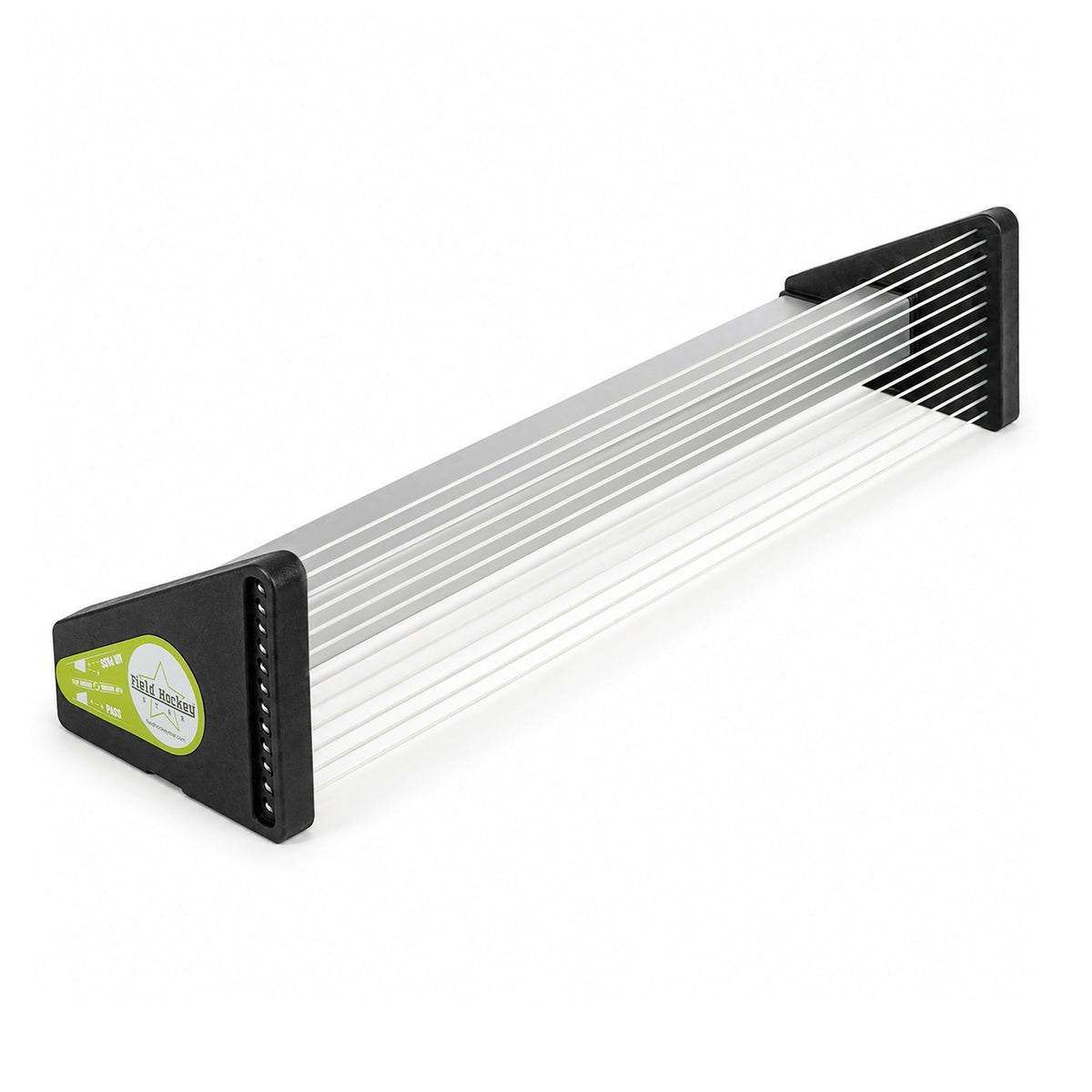
A flat wall is free and works well for these drills. A rebounder is useful indoors, on tiles, or when you can't use a wall. For a larger practice area, the Passing Kit combines a Rebounder with flooring tiles. Honest note: a rebounder returns the ball in a predictable way. Receiving from a teammate on the pitch, with spin and bounces, is still essential.
Indoors and at home, use push passes only. No hitting and no lifting the ball.
FAQ
Why does the ball bounce off my reverse stick?
Usually the stick is too stiff, too upright or tilted back. Loosen the right hand, get the stick lower and angle it slightly forward over the ball.
Where should I receive on the backhand?
In front of your left foot, about an arm's length away. That leaves room for your next touch.
Should I run around the ball to take it on my forehand?
Only if you have plenty of time. In most game situations, receiving on the reverse is faster and keeps your options open.
How often should I practise backhand receiving?
Short, frequent sessions work best: about 10 minutes, 3 times a week, against a wall or rebounder.
Can beginners learn reverse stick receiving?
Yes. Start with slow, soft passes from 3 m (10 ft) and focus on stick angle and soft hands before adding speed.
Related articles
- How to receive the ball in field hockey
- Receiving on the move: drills to keep your speed
- Field hockey passing drills you can do alone
In the US? The Rebounder, Skiller and Skills Zone are also available on Amazon.