Quick answer
In the US, school field hockey is a fall sport: tryouts and preseason start in August, games run from late August or September to November, and state playoffs end the season in November. Winter brings indoor and club hockey, and spring and summer are for club tournaments, camps and recruiting events. In most of Europe, club hockey runs from about September to June, with a winter break. In countries like the Netherlands, Germany and Belgium, many players switch to an indoor season from roughly December to February. Exact dates depend on your state, country and club, so always check the local schedule.
Key takeaways
- US: school season in the fall, club and indoor in winter and spring, camps in summer.
- Europe: one long club season with a winter break, often filled by indoor hockey.
- The best time for skill work at home is the gap between seasons, not the middle of the busiest weeks.
- Plan rest on purpose. A player who goes from fall season to winter club to spring club with no break gets tired.
- Dates vary by state, country, league and age group. Use this as a map, not a fixed schedule.
The US calendar
Field hockey in the US is mostly played in the eastern half of the country, with school and club as two separate tracks.
| Months | What happens | What it means for your child |
|---|---|---|
| Aug | High school tryouts and preseason | Fitness and first touch need to be ready before day one |
| Sep–Nov | High school and college fall season, then playoffs | Several practices and games a week; little time for extra work |
| Nov–Feb | Club winter season, indoor leagues, some large club tournaments | Lighter schedule; good time to fix one or two skills |
| Mar–Jun | Spring club season and tournaments | Game time, plus recruiting events for older players |
| Jun–Jul | Summer camps, showcases, club events | Build towards August tryouts |
Middle school programs often follow the high school calendar, but start dates and game limits are set by each state and school. Check with your school's athletic office.
College field hockey also plays in the fall. If your child is thinking about playing in college, spring and summer club events matter more, because that is when many college coaches watch players.
The European calendar
In Europe, club hockey is the main track. Schools play a smaller role than in the US.
| Months | What happens | What it means for your child |
|---|---|---|
| Aug | Preseason training | Back to fitness and ball work after summer |
| Sep–Nov | First half of the outdoor season | Weekly training and weekend matches |
| Dec–Feb | Winter break; indoor season in many countries | Indoor hockey or a quieter period, depending on the club |
| Mar–Jun | Second half of the outdoor season | Matches, finals, end-of-season tournaments |
| Jul | Summer break and camps | Rest first, then optional camps |
Not every country works the same way. Some leagues finish earlier in spring, some have a short winter break with no indoor season, and youth leagues may use different dates from adult leagues. Ask your club for its fixture list.
In the southern hemisphere the outdoor season is in the opposite half of the year. If you have moved or are watching hockey from another country, that explains why their season looks "wrong".
Indoor hockey: what parents should know
Indoor hockey is played in a sports hall with side barriers, a smaller ball area and fewer players. The ball is pushed, not hit, and it usually stays on the floor except for shots at goal. The exact rules differ by country and age group, so check your league's rules. For outdoor players, a winter of indoor hockey is a great way to sharpen ball control, quick passing and decision-making.
Where skill work at home fits
Most improvement happens in the quieter weeks between seasons, when there is time for short, focused practice. Here is a simple guide:
- During the busy season: 10–15 minutes of ball touches 1–2 times a week is plenty. The team schedule comes first, and rest matters.
- After the season: 1–2 weeks of real rest, then 3–4 sessions a week of 20–30 minutes on one or two skills.
- 4–6 weeks before tryouts or a new season: make sessions faster and more game-like, and add fitness.
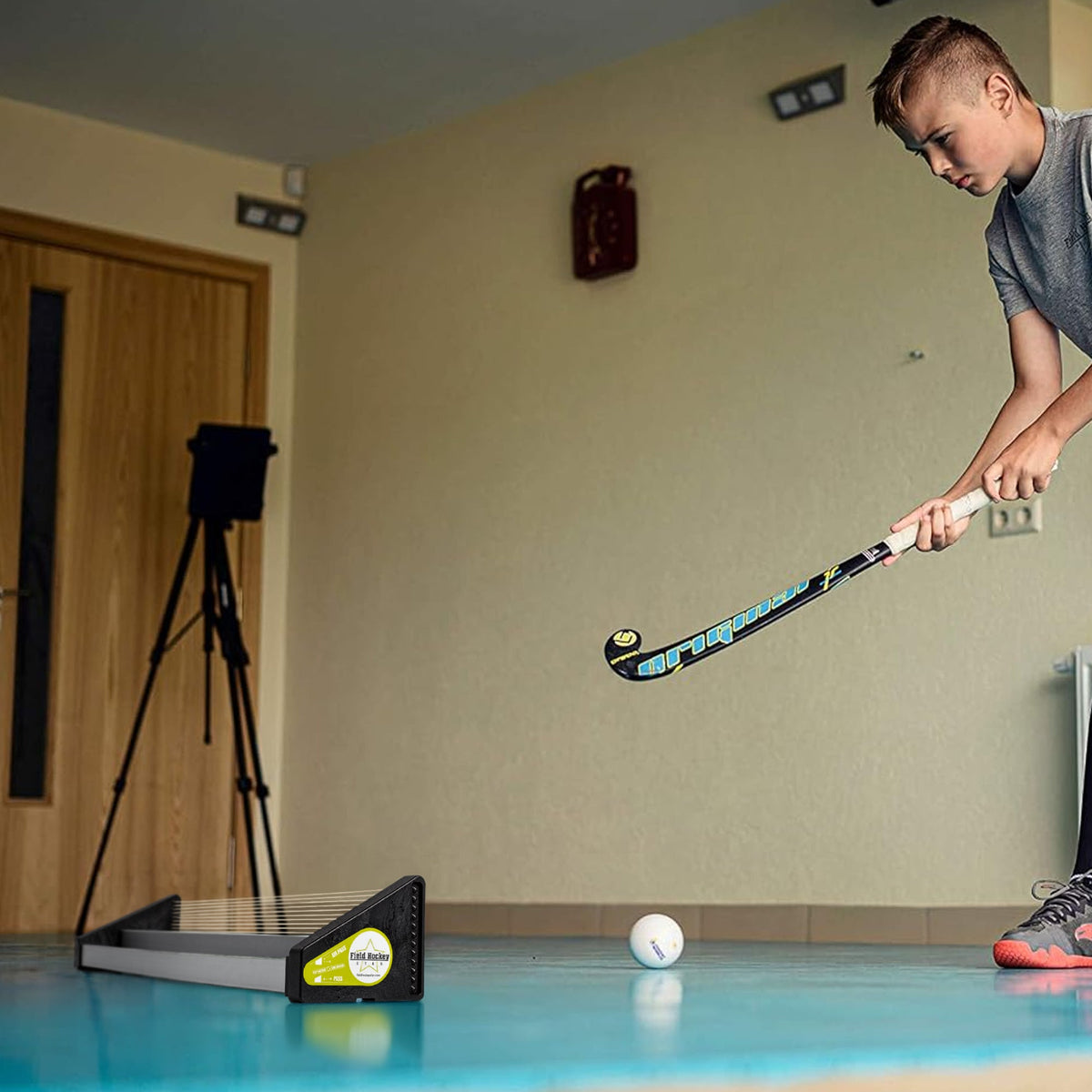
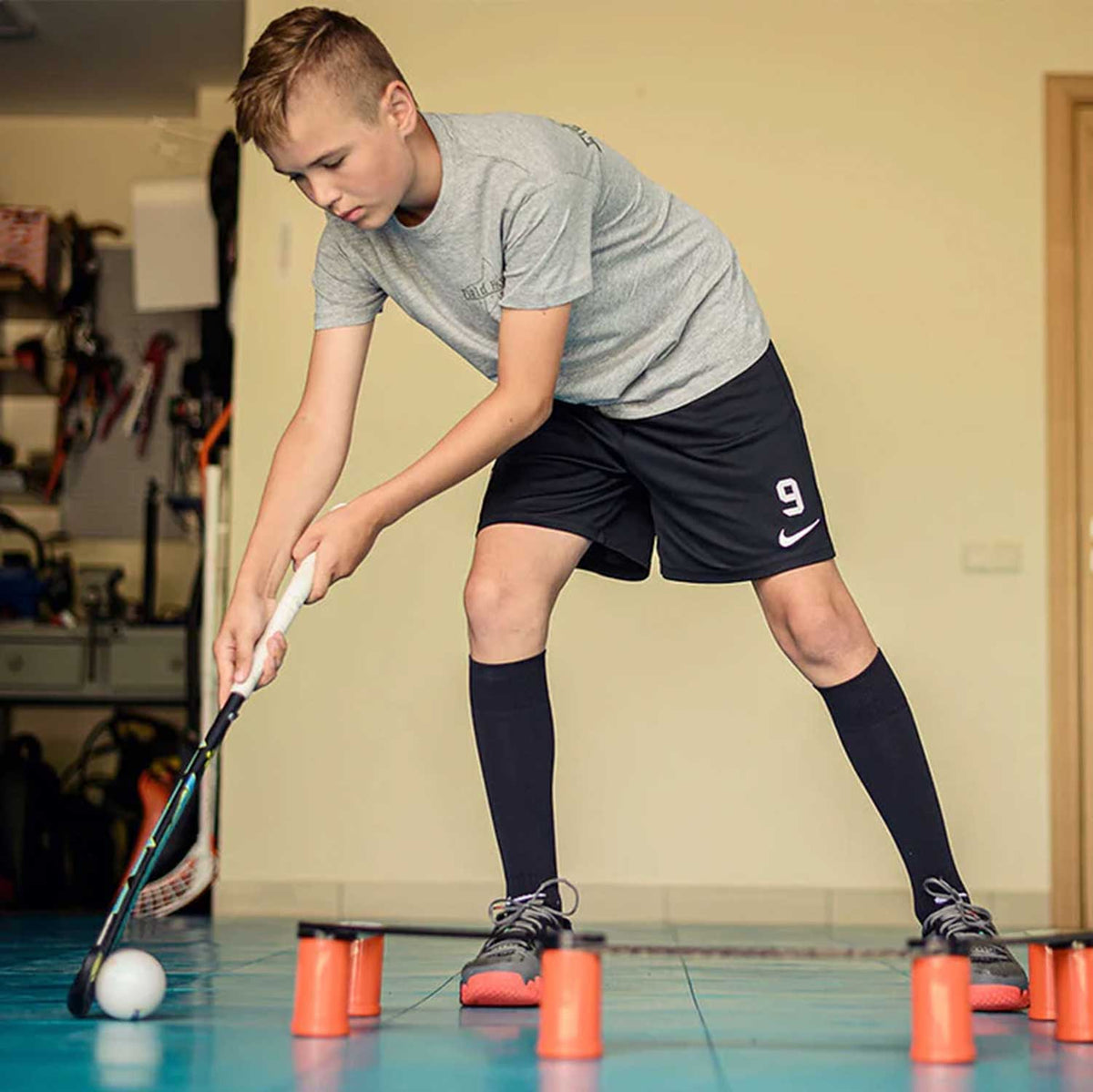
At home, keep the ball on the floor: dribbling, push passes and receiving. A wall and a few cones are enough to start. If there is no suitable wall, a Rebounder returns push passes, and the Skiller with the free Field Hockey App makes ball control practice more playful for younger kids.
A simple yearly plan for families
- Put the team and club dates in one shared calendar as soon as they are published.
- Mark two rest periods in the year, each at least 1–2 weeks with no structured hockey.
- Choose one skill to improve in each quiet period, based on coach feedback.
- Avoid stacking two teams with overlapping schedules unless your child really wants it and still has time to rest.
FAQ
When is field hockey season in the US?
High school and college field hockey is played in the fall. Tryouts and preseason start in August, and the season usually ends with playoffs in November. Club, indoor and camps fill the rest of the year.
When is field hockey season in Europe?
Most outdoor club seasons run from about September to June with a winter break. In several countries, players switch to indoor hockey from roughly December to February.
Should my child play club and school hockey at the same time?
It depends on age, schedule and energy. Many players do both, but make sure there is at least one full rest day a week and real breaks between seasons.
When is the best time to practise at home?
The weeks after a season ends and the month before tryouts or a new season. During the busiest weeks, short sessions of 10–15 minutes are enough.
Is indoor hockey useful for outdoor players?
Yes. Indoor hockey builds close ball control, quick passing and fast decisions, which all carry over to the outdoor game.
Related articles
- Field hockey off-season training plan
- High school field hockey tryouts: how to prepare
- Indoor hockey season: prepare your skills at home
In the US? The Rebounder, Skiller and Skills Zone are also available on Amazon.