Quick answer
Field hockey is played 11 against 11, including one goalkeeper per team. Players move the ball with the flat side of the stick and may not use their feet or body to play it on purpose. A goal only counts if an attacker touches the ball inside the shooting circle, the D-shaped area in front of goal. Fouls lead to free hits, and fouls by defenders near their goal can give the attack a penalty corner or a penalty stroke. There is no offside. Exact details, like game length and cards, vary by country, age group and league.
Key takeaways
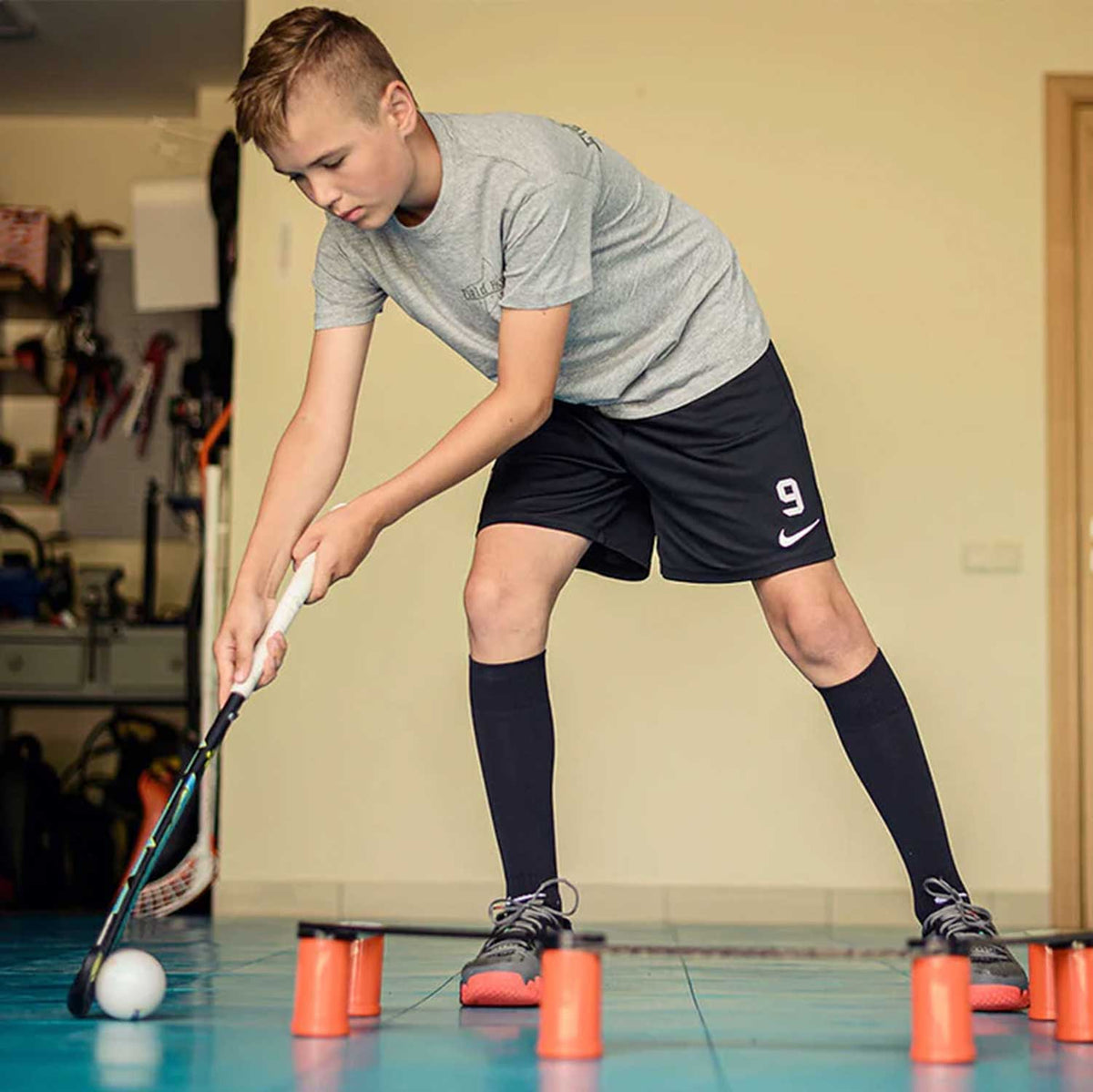
- Only the flat side of the stick (and its edges) may be used to play the ball.
- Goals count only when the attack touches the ball inside the circle.
- Deliberately playing the ball with the foot or body is a foul, except for goalkeepers in their circle.
- There is no offside, and substitutions are usually unlimited and rolling.
- Game length, card rules and youth formats differ: check your league's rules.
The basics
| Topic | The simple version |
|---|---|
| Players | 11 per team on the pitch, including a goalkeeper. Youth and indoor formats use fewer players. |
| Game length | International games use four 15-minute quarters. School, youth and club games vary. |
| Substitutions | Usually unlimited and rolling, so players can come on and off during play. |
| Scoring | One point per goal. The ball must be touched by an attacker inside the circle. |
| Offside | None. |
The pitch in plain words
- The circle: the D-shaped area in front of each goal. Goals can only be scored from here, and many important fouls are judged by whether they happen inside it.
- The 23 m area: the zone between the backline and the line 23 m (25 yd) out. Extra rules apply to free hits here.
- Backline: the end line, including the goal line.
- Sideline: the long line on each side.
What counts as a foul
These are the fouls you will see most often as a parent watching from the side:
- Using the rounded side of the stick. The back of the stick may not touch the ball.
- Foot or body. A player may not stop, kick or move the ball with their foot or body on purpose. If the ball just hits a foot by accident and nobody gains an advantage, umpires often let play continue.
- Obstruction. A player with the ball may not use their body or stick to block an opponent who is trying to play it, for example by turning their back to shield it.
- Stick interference and tackles. Hitting, hooking or holding an opponent's stick, or tackling in a way that hits the player rather than the ball.
- Dangerous play. Raising the ball dangerously at other players, or swinging the stick in a dangerous way.
- Third party. Running in between an opponent and the ball to stop them reaching it, without trying to play the ball yourself.
How play restarts
Free hit
Most fouls give the other team a free hit where the foul happened. Opponents must stand back, usually 5 m (16 ft). The player can pass or dribble the ball themselves, which is called a self-pass. Inside the attacking 23 m area there are extra restrictions, such as the ball having to travel a certain distance before it can go into the circle. Check your league's rules for the exact details.
Sideline and backline
If the ball goes over the sideline, the other team restarts with a free hit from that spot. If an attacker plays it over the backline, the defending team restarts with a free hit. If a defender plays it over the backline by accident, the attack usually gets a long corner, restarted from the 23 m line in line with where the ball went out.
Penalty corner
The penalty corner is the set piece you will recognise: one attacker pushes the ball from the backline, teammates wait at the top of the circle, and defenders run out from the goal. It is usually awarded for fouls by defenders inside their circle, or deliberate fouls in their 23 m area. For a shot to count as a goal from a penalty corner, the ball must first leave the circle before the attack shoots, and if the first shot is a hit it must not be too high when it crosses the goal line.
Penalty stroke
A penalty stroke is a one-on-one between an attacker and the goalkeeper from a spot in front of goal. It is awarded for more serious defensive fouls in the circle, for example a foul that stops a likely goal.
Cards
Umpires can show cards for misconduct or repeated fouls:
- Green card: a warning or a short suspension, depending on the competition.
- Yellow card: a temporary suspension, usually of several minutes. The team plays with one fewer player.
- Red card: the player is out for the rest of the game.
Suspension lengths differ between international rules, US high school rules and club leagues, so check your league's rules.
Goalkeepers
Goalkeepers wear full protective equipment and may use their stick, body, hands and feet to stop the ball inside their own circle. Some youth and lower-level games use a field player with kicking rights instead of a fully equipped keeper.
Indoor hockey is different
Indoor hockey, popular in Europe in winter, has smaller teams and a smaller pitch with side barriers. The ball is pushed, not hit, and may only be raised in limited situations, such as some shots at goal. If your child plays indoor, read the specific indoor rules from your federation.
FAQ
Why can you only use one side of the stick in field hockey?
The rules allow only the flat side and its edges. This is a basic safety and fairness rule, and it is why players turn the stick over to play the ball on their left side, called the reverse stick.
Is there offside in field hockey?
No. Offside was removed from field hockey many years ago, so attackers can stand anywhere on the pitch.
Can you score from outside the circle?
No. An attacker must touch the ball inside the circle for a goal to count. A shot from outside that goes in without a touch inside is not a goal.
What happens if the ball hits a player's foot?
If it is accidental and gives no advantage, umpires usually play on. If the player uses their foot on purpose or gains an advantage, it is a foul.
How long is a field hockey game?
International games are four quarters of 15 minutes. US high school, youth and club games can use different lengths, so check your league's rules.